



Participating in industry events is a major investment, and B2B purchasing decisions in the manufacturing sector can easily span a year or two. How can you properly nurture acquired contacts and turn booth conversations into actual sales? B2B marketing expert Agnieszka Wnuk shares a practical post-show framework.
What comes next after a trade show? How can you ensure the contacts you bring back to your company don’t go to waste?
Have you ever exhibited at a trade fair investing significant sums of money in the process? Perhaps it wasn’t your own personal capital, but the costs were certainly borne by your company. Trade shows often require substantial expenditure, so it is crucial to ensure that the contacts gained there are properly followed up on. What steps can you take? As an exhibitor, what can you do? After the event, organize your contacts, send thank-you notes for the conversations held, reach out to individuals with specific needs, and share something of value such as a checklist. Afterward, stay visible; the purchasing decision-making process can sometimes span a year or two. I have attended many trade shows and witnessed a great deal and to put it bluntly: many companies fail to utilize them to their full potential.
Do companies truly make the most of their trade show participation?
Not always but that doesn’t mean trade shows themselves are ineffective. Throughout my career both in-house and while working on client projects I have managed trade show participation from A to Z. Today, as an interim marketing manager, I support industrial companies, and I frequently attend trade shows as a visitor. I still enjoy keeping my finger on the pulse of the industry.
Companies spend large amounts of money on their booths, yet often, no one ever checks what actually comes of it. Here is a conversation I had with a client:
“Agnieszka, we generated 55 leads at the recent trade show.”
“And how many of those leads visited you a year ago? How many are already in your CRM?”
“Um, well, no one checks that…”
“I see. So, would you say the trade show was a success?”
“Oh, definitely, Agnieszka, a huge success.”
That’s how it goes…
We value face-to-face interaction, and a handshake still carries weight, especially now, as we’re being flooded with AI-driven solutions. The trick is knowing what to do with those conversations once you’re back at the office so that none of it goes to waste!
Where companies lose the most ground:
- They don’t vet their contacts. They don’t know who is a new prospect and who is already in their CRM.
- They fail to bridge the gap between the trade show and LinkedIn. The people you meet in person also exist online; these worlds overlap.
- They expect immediate results. The buying process following a trade show takes just as long as it does after any other marketing or sales activity.
- They celebrate the mere act of taking notes. Marketing teams don’t need a pat on the back just because someone jotted down a few trade show notes, scanned a business card into the CRM, or worse left a stack of business cards tucked away in a notebook.
What are you actually bringing back from a trade show?
Not every conversation at your booth is a lead. When a client talks to me about “leads” from a trade show, I often wonder: do they actually mean “inquiries”? Before you start counting, define exactly what you have in your hands.
Contact: a person you spoke with. Not everyone who stops by your booth is there for your product; some are just “looking around.” Inquiry: A specific question about a product or service is merely the start of a conversation, not a sale.
Trade show lead: A contact showing interest that is worth developing. On its own, it doesn’t guarantee anything; the decision-making process could take a year or two, and the inquiry might ultimately end up in the trash.
Returning contact: A company already in your CRM, or one that visited you a year ago, is not a new lead.


What to do after returning from a trade show: A step-by-step plan
Heading to a trade show? Establish this plan before you even leave. Once you return, a backlog of tasks will be waiting for you, and the final day of the event will quickly fade into a distant memory.
Step 1: Organize your contacts in your CRM
Transcribe your notes and add the lead source for example, "TRADE SHOW XYZ 2026." This allows you to track how many leads a specific event generated and identify which contacts were already in your database. You will also be able to spot contacts that were previously left unaddressed.
Next, categorize your contacts into three groups:
- Hot: Those with a specific need or a request for a quote. Reach out via phone ideally, this should be handled by the sales consultant responsible for the relevant territory, if your company is structured that way.
- Nurture: Those who showed interest but have no urgent need. Send them relevant, useful materials.
- Others: Casual conversations or individuals outside your target audience. Do not include these in your final lead count.
Step 2: Send a thank-you note
Express your appreciation for the conversation via email or even a LinkedIn message. Be specific mention which trade show you met at and what you discussed. You can prepare a ready-made LinkedIn message template, making sure to personalize the name for example:
"Good morning, Mr. Krzysztof. Thank you for our conversation at the XYZ Trade Fair in Poznań regarding [topic of discussion]. As we agreed, [mention what was promised]. I’d like to add you to my professional network."
I’m sharing this from a practitioner’s perspective. A note like this has come in handy for me many times and provided a great starting point for continuing the conversation. The connections I made at trade fairs still help me to this day. Believe me it works! Plus, you’ll always know exactly how a particular contact ended up in your LinkedIn network.
Step 3: Call the people who have a genuine need
These conversations are on the salesperson’s side. Start by referencing the conversation you had at the booth, rather than launching into a company presentation. Follow up on any open issues and define the next step.
Step 4: Send something useful, such as a checklist.
If someone isn’t ready to buy immediately, they need a reason to remember you. A checklist or a case study relevant to your conversation topic works well. Don’t spend your time singing the praises of your own services focus on being helpful instead.
Think about what you could include in such a checklist.
If your company uses an email marketing system, work with your marketing team to prepare a follow-up message that includes additional, valuable information. Alternatively, if you have a YouTube channel, you could share a relevant video that highlights a solution this will help keep your potential client engaged.
Step 5: Leverage what you’ve learned.
For a marketer, trade shows are a goldmine of information. I always enjoyed listening to conversations with clients at these events because I would invariably learn something new. Make a note of the questions asked at the booth and the specific language clients use. You now have ready-made material for content that addresses real-world problems.


How do you maintain contact when a client’s decision-making process takes a year or two?
Decision-makers rarely buy on the spot. While we might wish otherwise, B2B purchasing processes can be incredibly long. A single email is not enough; marketing is about building relationships over time, not just executing one-off actions.
- Stay visible on LinkedIn. Posts shared from personal profiles carry more weight than those posted solely on a company page. Write a short recap of the trade show let others see you!
- Optimize your sales team’s profiles. If someone is standing at your booth wearing a branded shirt, their LinkedIn profile should clearly reflect their role. You are building your company’s image, and your employees much like when they are staffing your trade show booth are an integral part of that. Give your clients the chance to see you as a credible and professional organization.
- Share your expertise. Showcase case studies, solutions, and answers to questions you received at the booth. Many people especially in technical fields often follow up by looking for more information on your website or social media. Create content that reinforces what you presented at the trade show; perhaps you’re running a specific sales campaign for a particular service or product model.
- Bridge the gap between marketing and sales. Determine who will review the leads collected at the event and who will handle the follow-up. If you don’t have an automated process in place, clarify who is responsible for entering these contacts into your CRM system. Who will oversee this?
- Invite prospects to future events. By using your CRM, you can easily identify individuals worth scheduling meetings with for upcoming events. If you use Excel, make sure to update your lists after the trade show so you know exactly whom to invite to future events where you’ll be present.
How should you measure the results of a trade show?
Don’t just boast about the total number of contacts collected. Look at how many of them are new clients, and assess whether the quality of the leads matches their quantity. Also, be upfront about the fact that not everything can be measured just a week after a trade show. I know many people ask, "Did the trade show pay off?" It’s often difficult to gauge this only a week later, especially since decision-making processes can be long. There’s a distinction between direct sales and brand image both are important and shouldn't be overlooked! Not everything can be measured quickly; sometimes, nurturing a connection made at a trade show can take quite a while.
Your to-do list for before and after the trade show
Heading to a trade show? Start with these steps:
- Before you go, designate someone to be in charge. Decide who will handle the follow-ups and when you will reach out.
- Prepare a template note on your phone something simple like, "We met at the XYZ 2026 Trade Show." You can quickly send this via LinkedIn or SMS to make the other person feel acknowledged. You can even personalize these notes; using someone’s name makes them feel truly remembered.
- Take detailed notes while at your booth. Record what was discussed, any promises made, specific questions asked, or key information shared this can be useful later for creating social media posts or other content.
- Connect on LinkedIn right away. As mentioned above, include a note about where you met.
- Once you’re back, update your CRM. Log the lead source and check if the person is already in your database.
- Send thank-you messages within the first few days, referencing your specific conversation.
- Call your "hot" leads within the first week. Determine the next step.
- Send useful material to the others for example, a checklist or a case study.
- After a few weeks, conduct a review. Compare new leads, returning companies, and the quality of your conversations.
- Stay visible. A trade show is the beginning of a relationship, not the end.
You often spend a significant amount of money on your booths, so make the most of what remains afterward. Trade shows don’t end when you pack up your exhibits.
I wish you productive conversations and meaningful meetings! Remember, thorough preparation for the trade show itself is also crucial but that’s a topic for an entirely different article.
About the author
Agnieszka Wnuk specializes in B2B marketing, covering everything from strategy to marketing planning. She works as an interim marketer.
Want to receive monthly B2B insights tailored to the fastener sector?
Subscribe to the FASTENER POLAND® MONTHLY newsletter on LinkedIn:
Put these insights into practice at the 10th edition of FASTENER POLAND®!
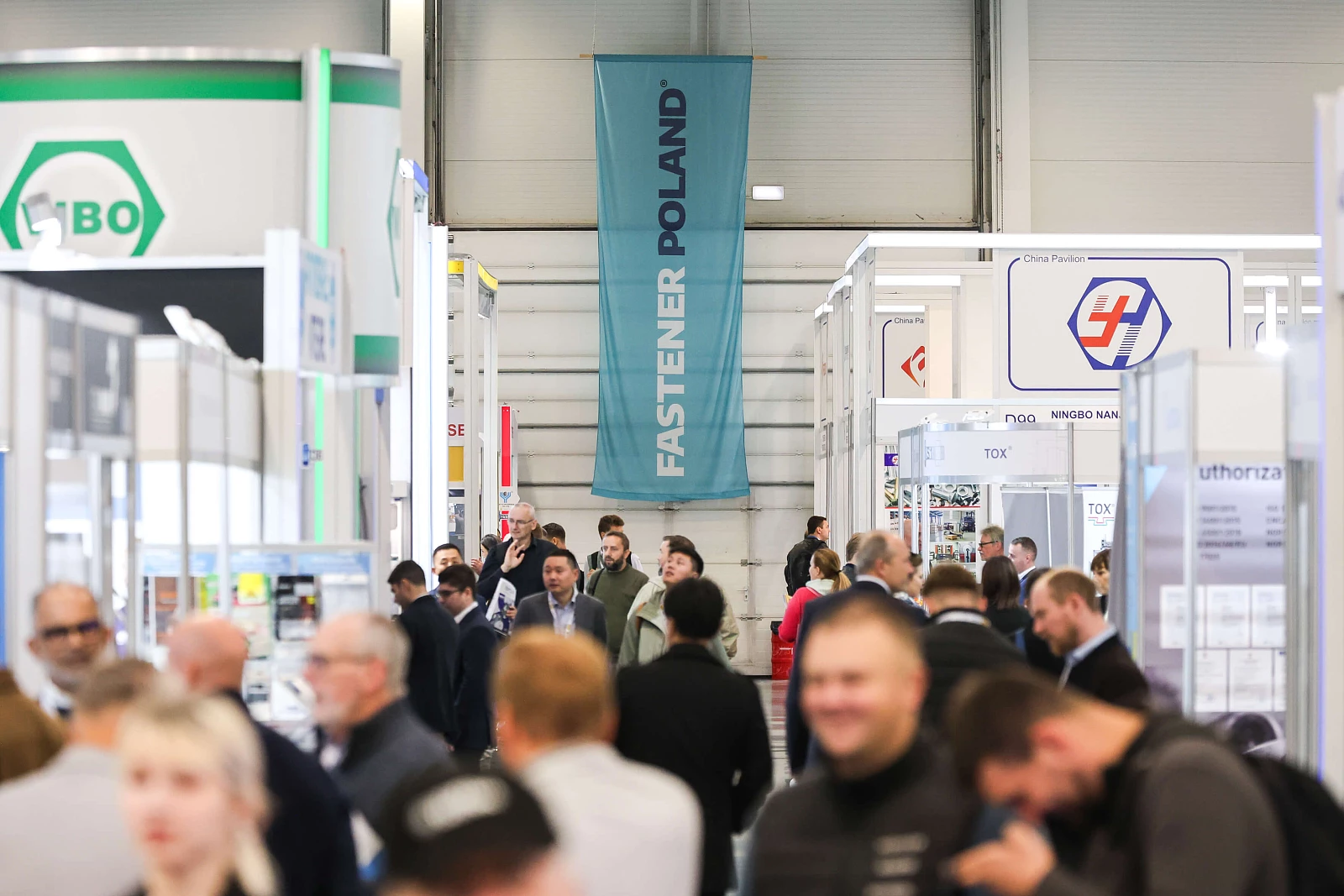
Our recent edition brought together 150 exhibitors from 20 countries and 3,097 visitors from 40 nations (46% of whom were international professionals). Join the industry leaders and showcase your solutions at the milestone 10th edition of the FASTENER POLAND® trade fair, taking place on October 13–14, 2027, at EXPO Krakow.
Have questions? Contact our team:
-
Krzysztof Imiołczyk – Deputy Project Manager · +48 506 038 142 · imiolczyk@targi.krakow.pl
-
Jolanta Wilkosz – Senior Event Manager · +48 516 048 995 · wilkosz@targi.krakow.pl